It is very important to distinguish between ignorance and innocence while reading Melville’s stories. In “Benito Cereno” Amasa Delano can be seen as an ignorant character, but has little if any innocence to him. While he may have saved Benito Cereno and the white crew, by doing so he supported the system of slavery by quelling the rebellion. By the same logic Benito Cereno cannot be innocent for using slaves or Babo for enslaving the white crew when he saw the opportunity.
The major theme in the story is that, while some may be ignorant, no one is innocent. This fit in perfectly with the political debate over slavery between the north and south at the time. While the north often times attempted to maintain the higher ground saying that slavery is immoral, they benefited and profited from it. The raw materials that south produced with slave labor, such as cotton, were shipped to up the much work industrial north where they were turned into items such as clothing. Once produced, they were shipped back down to the south, subjecting southern to higher price because they could not produce the items themselves. Just as in the case of Amasa Delano, the north may be able to claim ignorance, but not innocence.
Showing posts with label Melville. Show all posts
Showing posts with label Melville. Show all posts
Monday, March 15, 2010

Horton, Melville's Fallen World
In no world but a fallen one could such lands exist.
This is one of the most interesting lines in Melville’s “The Encantadas.” He is describing the physical nature of the islands themselves, but the comment could be equally applied to the inhabitants, like the buccaneers, the Creole king, and the terrible hermit Oberlus. The Enchanted Isles are almost the anti-innocence, a representation of mankind’s worst tendencies.
However, in Melville innocence itself is not necessarily a particularly good thing. He shows the bright side of the tortoise, but he can’t help but show the other side as well. So characters like Amasa Delano communicate a distinctly mixed message. This brand of innocence is largely composed of ignorance and naïveté, leading Delano to misinterpret everything he sees. His innocence isn’t the least uplifting, and allows the mutiny to go on much longer than it should have.
The Chola widow might be called the counterpart to Delano’s character. Though the tragedies that befall her on the island destroy her innocence quickly enough, she retains a certain dignity that we don’t see elsewhere in these two stories, and she leaves the sailors impressed with her courage rather than annoyed with her ignorance. Unlike the other characters, she isn’t actually corrupted by the islands. Perhaps this is Melville’s best-case scenario for innocence in a fallen world.
Wednesday, March 10, 2010
Tregre, "Innocence/Ignorance is not Bliss.”, Melville, March 10
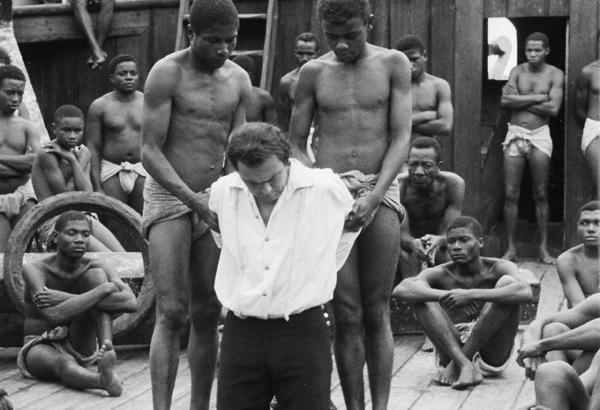
The perfect example to reflect Melville's view on innocence is his story, "Benito Cereno." His character Delano was a trusting, naive fellow who finds Cereno's ship damaged and a mess. The entire story, there are obvious warning signs that something is amiss this vessel, but Delano has an innocence and denies everything putting the blame on excuses. At the end, it turns out the slaves took over the ship and Cereno was cooperating by force. Delano's character is a reflection that he was impractical and blind. His innocence was quite annoying and ignorant. If it was not for Cereno, he surely would have lost his life. Melville had a view that the Spanish treatment of the slaves were bad, and though they revolted, the blacks could not be responsible. In the end, the narrator and the deposition were both the white mans. The black man's point of view and opinions were never heard. It was stricly a white person's point of view. The slaves revolted, but it was probably in response to their entrapment. They were not to blame, though they were very smart. The problem of slavery is never dealt with, but the guilt was just assigned to other people, much like the guilt was assigned to Cereno. Cereno was not a good guy because "it is not the adjective, its the noun." (Good Master: The good adjective does not matter, the master is what is bad, the noun of him being in charge of someone is bad, that is the problem). Melville's insightment in this story was quite an eye opener. The problem in the story was not addressed, just like the actual issue of slavery was never addressed. People just turn their eye to the problem and assign blame to another, much like Delano. In this case, innocence was ignorance and not bliss.
Saturday, March 6, 2010
McCay, Melville Post, March 12
While Hawthorne uses his personal past to examine the nature of America and Americans, Melville is obsessed by the present, both the political and the personal. However both are interested in examining the origins and the consequences of the American belief in innocence. Examine the way in which Melville examines innocence in the stories we are reading.
ALSO, PLEASE NOTE THE WAY I HAVE TITLED MY BLOG. I WOULD LIKE YOU TO PUT YOUR LAST NAME AS THE FIRST WORD IN THE TITLE, THEN ADD YOUR TITLE. MANY OF YOUR TITLES ARE EXCELLENT, AND I WOULD NOT WANT TO LOSE THEM
ALSO, PLEASE NOTE THE WAY I HAVE TITLED MY BLOG. I WOULD LIKE YOU TO PUT YOUR LAST NAME AS THE FIRST WORD IN THE TITLE, THEN ADD YOUR TITLE. MANY OF YOUR TITLES ARE EXCELLENT, AND I WOULD NOT WANT TO LOSE THEM
Subscribe to:
Posts (Atom)